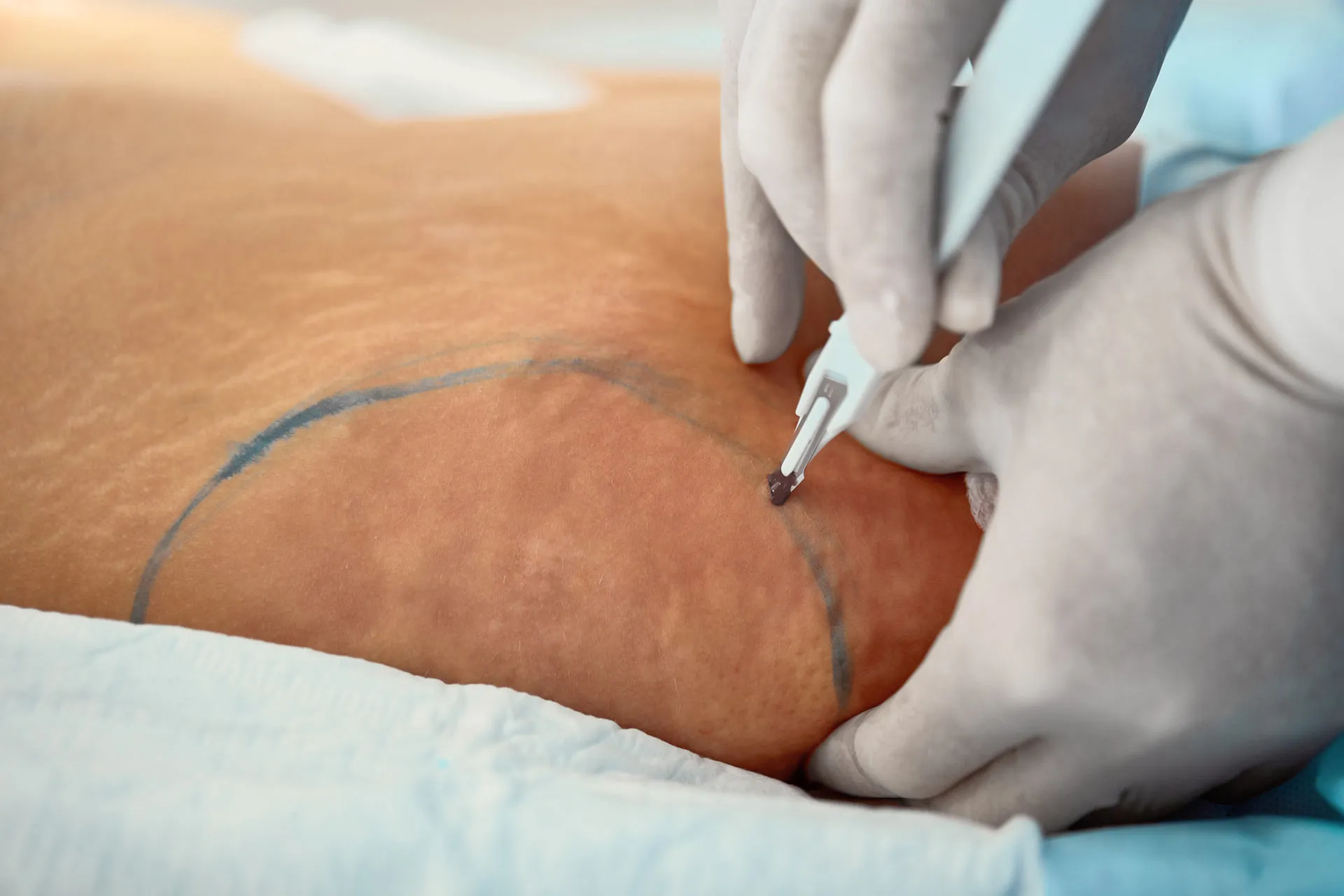
Ultrasonic rhinoplasty has become one of the most sought-after techniques by patients who wish to improve the shape of their nose with greater precision and a gentler recovery. Its main advantage lies in how it allows for work on the nasal bone: instead of using traditional impact instruments, it uses ultrasonic technology to reshape bone structures with greater control.
This can result in less trauma to surrounding tissues, fewer bruises, less initial swelling, and a more comfortable recovery in well-selected patients.
But it's important to clarify from the outset: ultrasonic rhinoplasty is not "rhinoplasty without surgery," it does not replace medical evaluation and does not mean that all cases should be operated on using the same technique. Technology is a tool; the outcome depends on the diagnosis, planning, and surgical experience.
Ultrasonic rhinoplasty is a technique of nasal surgery that uses piezoelectric or ultrasound instruments to work on the nasal bone with greater precision. Its goal is to reshape the nasal bone structure with less impact on soft tissues, blood vessels, and mucous membranes.
It is primarily used when it's necessary to correct the nasal dorsum, reduce a hump or bump,narrow nasal bones, or make fine bone adjustments. Compared to traditional techniques, it can help reduce bruising and initial swelling, although the full recovery from rhinoplasty still takes time and depends on each patient.
The nose is at the center of the face. A small change in the dorsum, the tip or the nasal width can completely alter facial harmony. That's why, a rhinoplasty shouldn't be planned solely as “removing a hump” or “making the nose smaller.” It should be designed considering the relationship of the nose with the forehead, cheekbones, lips, chin, and the overall facial expression.
The technique matters because each nasal structure responds differently. A nose with a bony hump is not the same as a wide nose, a drooping tip, thick skin, a deviated septum, or a secondary rhinoplasty.
Ultrasonic rhinoplasty provides precision, especially in bone work, but the final result depends on comprehensive planning.
Ultrasonic rhinoplasty uses a device that emits ultrasound micro-vibrations. These vibrations allow for controlled cutting, filing, or reshaping of the nasal bone. Unlike traditional instruments, which may require broader impacts or fractures to modify the bone, ultrasonic technology allows for more delicate work in specific areas.
This can help better preserve nearby tissues and reduce some of the trauma associated with nasal bone manipulation.
The main difference lies in how the nasal bones are worked on. In traditional rhinoplasty, the surgeon may use instruments such as osteotomes to make controlled cuts or fractures in the bone. This technique is still valid and can be suitable in many cases, but it can cause greater trauma to nearby tissues.
In ultrasonic rhinoplasty, piezoelectric instruments are used that act on the bone through ultrasonic vibrations. This allows for more precise cuts and a more delicate handling of the bone structure. The difference doesn't mean one technique is “good” and the other “bad”. It means that ultrasonic technology can offer advantages in cases where the bony component is significant, especially when greater precision, fewer bruises, and a more manageable initial recovery are desired.
It can be better for selected patients, especially when precise reshaping of the nasal bone is required. However, not all cases depend solely on the bone. A nose may require work on cartilage, the nasal tip, septum, nasal valves, skin, or soft tissues. In such cases, ultrasonic technology can be part of the plan, but it doesn't solve everything on its own.
The best technique isn't necessarily the most modern, but rather the one that addresses each patient's diagnosis.
In my practice, the question isn't just whether a patient can undergo ultrasonic rhinoplasty. The correct question is: what nasal structures do we need to correct to achieve a natural, functional, and harmonious result?
Ultrasonic rhinoplasty can be particularly useful for correcting alterations related to the bony structure of the nose.
It can help in cases such as:
It can also be part of an aesthetic rhinoplasty and is functionalwhen it is necessary to improve the shape of the nose and, at the same time, correct breathing problems associated with a deviated septum or other internal structures.
Yes. One of the most frequent indications for ultrasonic rhinoplasty is the correction of a nasal hump or dorsal hump.
The hump can be composed of bone, cartilage, or a combination of both. When there is a significant bony component, ultrasonic technology allows for more precise work on that structure. This can help achieve a straighter, smoother, and more harmonious profile, avoiding visible irregularities in the nasal dorsum.
However, removing the hump does not simply mean "lowering the bridge." It is also necessary to evaluate how the tip will look, how the nose will appear from the front, how it relates to the chin, and whether breathing may be affected.
It can help when nasal width is related to the nasal bones. In these cases, ultrasonic rhinoplasty allows for more controlled osteotomies or bone adjustments to narrow the dorsum or improve the shape of the bridge.
However, not every wide nose is corrected solely by working on the bone. Sometimes, it is also necessary to evaluate cartilage, the nasal tip, alar base, skin thickness, or facial proportions. Therefore, Assessment is key. Two patients might say, "I have a wide nose," but require completely different corrections.
Ultrasonic rhinoplasty primarily addresses the nasal bone. The tip, however, usually depends more on cartilage, support, skin, and refinement techniques. This means that ultrasonic technology can be part of the surgery, but it alone does not define the outcome of the tip.
If the main problem is a droopy, wide, round, or poorly defined tip, the surgical plan must include specific techniques to modify and support the nasal tip cartilages. In these cases, rhinoplasty should be designed comprehensively: dorsum, tip, base, profile, and respiratory function.
It can, if combined with functional corrections when indicated. Ultrasonic technology improves precision in bone work, but breathing depends on other structures such as the nasal septum, turbinates, nasal valves, and the internal shape of the nose.
If a patient breathes poorly, it's necessary to assess for a deviated septum, internal obstruction, valvular collapse, or turbinate hypertrophy. In such cases, rhinoplasty can combine the aesthetic and functional components. The ideal goal is for the nose not only to look better but also to function properly.
Ultrasonic rhinoplasty can offer several advantages when it is well indicated.
Ultrasound allows for more controlled bone reshaping. This is especially useful for the nasal dorsum, hump, and osteotomies. Greater precision can help avoid irregularities and achieve smoother lines in the nasal profile.
By acting more selectively on the bone, ultrasonic technology can reduce the impact on blood vessels, mucosa, and nearby soft tissues. This can make the initial recovery more comfortable for some patients.
One of the most well-known benefits of ultrasonic rhinoplasty is that it can result in less bruising around the eyes and less initial swelling compared to more traumatic techniques. This does not mean there will be no swelling. All rhinoplasties cause swelling, but the intensity may be lower in suitable patients.
Many patients value this technique because the post-operative period can feel less aggressive. There may be less bruising, less pain, and a more comfortable return to social activities compared to traditional techniques. Even so, the nose needs months for swelling to resolve and to show its definitive result.
The precision of bone work helps create a smoother, more proportionate nasal dorsum that is consistent with the face, but naturalness doesn't depend solely on technology. It depends on respecting anatomy, avoiding excessive changes, and designing a nose that integrates with the rest of the facial features.
Yes, in most cases, it causes less bruising than traditional rhinoplasty with more traumatic osteotomies. This is because ultrasound allows for more precise bone work and less damage to soft tissues.
However, the appearance of bruising also depends on individual factors: skin type, surgical technique, extent of surgery, tendency to swell, medications, post-operative care, and each patient's response.
Initial recovery can be faster or more comfortable compared to traditional techniques, especially regarding visible bruising and swelling, but the complete rhinoplasty process remains gradual. Nasal swelling can take months to resolve, especially in the nasal tip or in patients with thick skin.
In general, the patient may notice significant changes during the first few weeks, but the final result can take between 12 and 18 months, depending on the individual case. Technology can improve the initial experience, but it does not accelerate all biological healing processes.
This timeline is general. Each recovery must be guided by the surgeon.
Most patients describe the recovery as more uncomfortable than painful. There may be pressure, congestion, swelling, and sensitivity, but pain is usually managed with prescribed medications.
The experience varies depending on the pain threshold, the extent of the surgery, whether there was functional correction, whether the nasal tip, septum, or internal structures were worked on, and how each body responds. Ultrasonic rhinoplasty can reduce some bone trauma, but it is still surgery and requires care.
A patient who wishes to improve the shape of their nose and has a bony component that could benefit from ultrasonic work may be a candidate.
It may also be considered for patients who present with:
However, the indication does not solely depend on the desire to use ultrasonic technology. It depends on a complete diagnosis of the nose and face.
Not all cases require ultrasonic rhinoplasty. If the main problem lies in the tip, skin, cartilages, or internal respiratory function, ultrasonic technology may only be part of the plan or even unnecessary.
Nor is it ideal to think of this technique as a guarantee of a perfect result. Rhinoplasty always requires analysis, planning, technique, and realistic expectations. A patient might not be a candidate if they have medical conditions that increase surgical risks, unrealistic expectations, unstudied respiratory problems, or require a different type of management.
Ultrasonic rhinoplasty and non-surgical rhinoplasty are not the same. Ultrasonic rhinoplasty is a surgical procedure. It can modify bone, cartilage, and internal nasal structures to achieve lasting changes. It can also improve respiratory function if internal alterations are corrected.
Rhinomodeling is a non-surgical procedure using hyaluronic acid. It can camouflage minor defects or enhance certain profile details, but it does not reduce nose size, remove bone, or correct functional problems.
If you are looking for a structural change, a more proportionate nose, or a definitive correction of a dorsal hump, rhinoplasty is usually more suitable than rhinomodeling.
The cost of ultrasonic rhinoplasty in Bogotá depends on several factors: case complexity, whether it's primary or secondary, if functional correction is needed, surgical time, clinic, anesthesia, examinations, follow-ups, and technology used.
Therefore, it is not responsible to define an exact price without an assessment. Two patients may require very different surgeries even if both aim to "improve their nose."
During the consultation, nasal anatomy, aesthetic goals, respiratory function, and the type of technique that can offer the best result are evaluated. With this information, a surgical plan and a budget tailored to the case are provided.
A successful rhinoplasty begins long before the operating room. It starts with a detailed assessment.
During the consultation, the following are analyzed:
With this information, it is decided whether ultrasonic rhinoplasty is the primary technique, if it should be combined with other procedures, or if another alternative is more suitable.
Ultrasonic rhinoplasty can be an excellent alternative when the goal is to reshape the nasal bone with greater precision, reduce trauma to surrounding tissues, and achieve a gentler initial recovery.
If you are considering ultrasonic rhinoplasty in Bogotá, schedule a consultation. During your consultation, we will review your case, analyze your nasal structure, and determine if this technique is the most suitable to achieve the results you are looking for.

Agenda una consulta de valoración y recibe una atención personalizadaSchedule an assessment consultation and receive personalized attention to design a plan that enhances your beauty with confidence and confidence. Your dream result starts here!
¡Tu resultado soñado comienza aquí!